
Guide
Bat damage and health concerns in North Carolina homes
Colonies do more than startle you at dusk—guano and urine degrade insulation and air quality, and any bite, scratch, or sleeping exposure with a bat in the room needs immediate medical guidance.
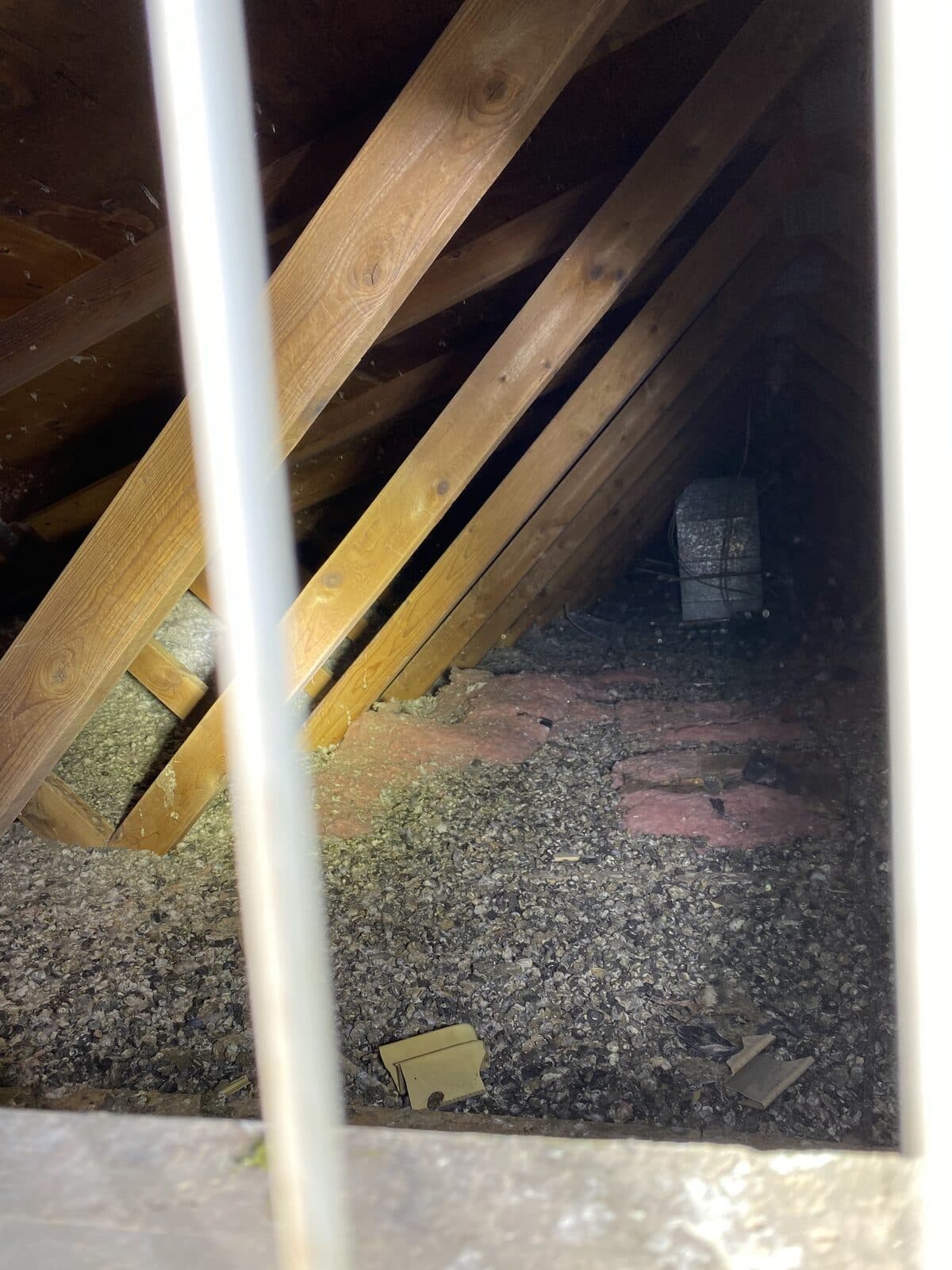
- Guano staining and insulation soak
- Ammonia odor in upper floors
- Potential HVAC contamination paths
- Bite/scratch/sleeping exposure = medical urgency
- Cleanup after exclusion, not before
- Written documentation available
Structural and insulation damage
Guano piles stain wood and drywall; urine soaks insulation and can corrode metal. Over a maternity season, contamination spreads under ridge lines and into HVAC returns on sealed Carolina attics.
Odor and air quality
Ammonia smells intensify on hot Piedmont and coastal days. Odor alone does not prove disease risk, but it signals a cleanup conversation after exclusion.
Exposure is urgent
If anyone was bitten, scratched, or sleeping in a room with a bat, seek medical care right away. Our voice intake flags those leads as URGENT for callback—public-health decisions come first.
Do not stir heavy piles
DIY vacuuming of dried guano can aerosolize dust. Controlled remediation with PPE is the safer path once bats are excluded.
FAQ
- Not automatically—but heavy dried piles deserve professional handling rather than casual stirring. Ask your physician about personal risk factors.